Trigonometric Functions
What is a Trigonometric Function?
Trigonometric Functions are mathematical functions that relate the angles of a right triangle to the ratio of its sides. Trigonometric functions are used to model periodic or oscillatory behaviour. Think of a pendulum swaying back and forth, or a play ground swing in motion. These are both real life examples which can be modelled using trig functions. The primary trig functions are the sine function, cosine function, and the tangent function, which will all be discussed below.
Sine Function
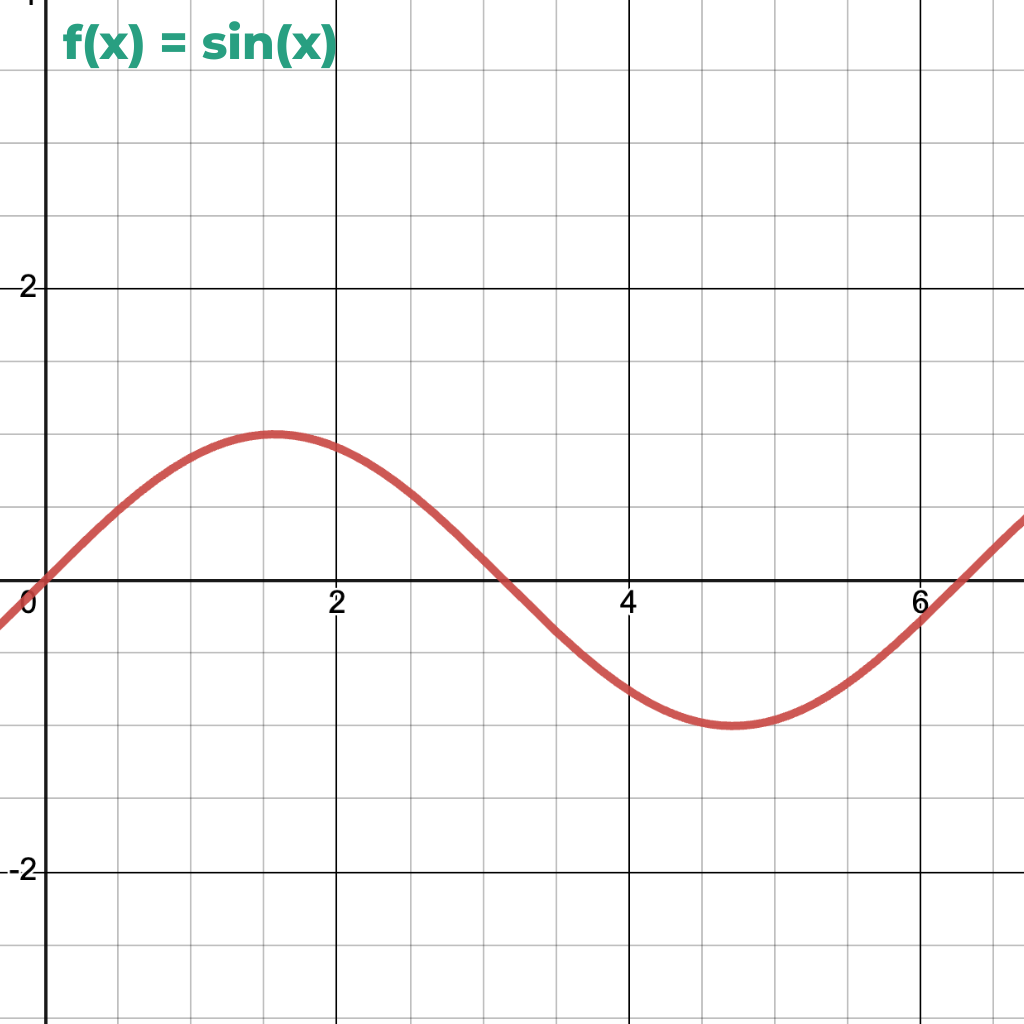
As you know, the sine of an angle in a right angled triangle is the ratio of the length of the opposite side to the length of the hypotenuse. The input for the sine function can be any value from negative to positive infinity. As shown on the graph, the function’s value stays in between -1 and 1.
Note:
The domain for sin(x): All real numbers
The range for sin(x): [-1,1]
Cosine Function
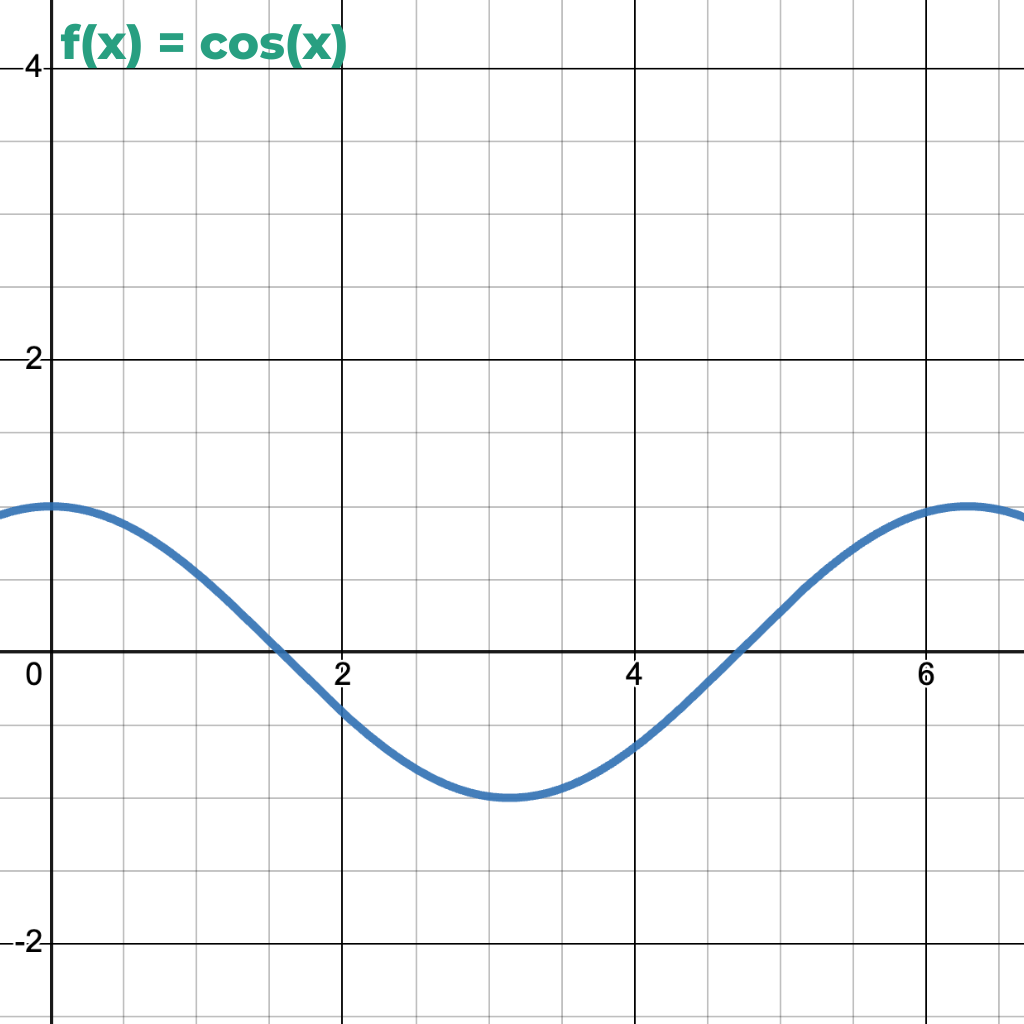
The cosine of an angle in a right angled triangle is the ratio of the length of the adjacent side to the length of the hypotenuse. If you notice, the cosine function looks very similar to the sine function and in fact, it is! It it simply just shifted to the left by 90 degrees.
Note:
The domain for cos(x): All real numbers
The range for cos(x): [-1,1]
Tangent Function
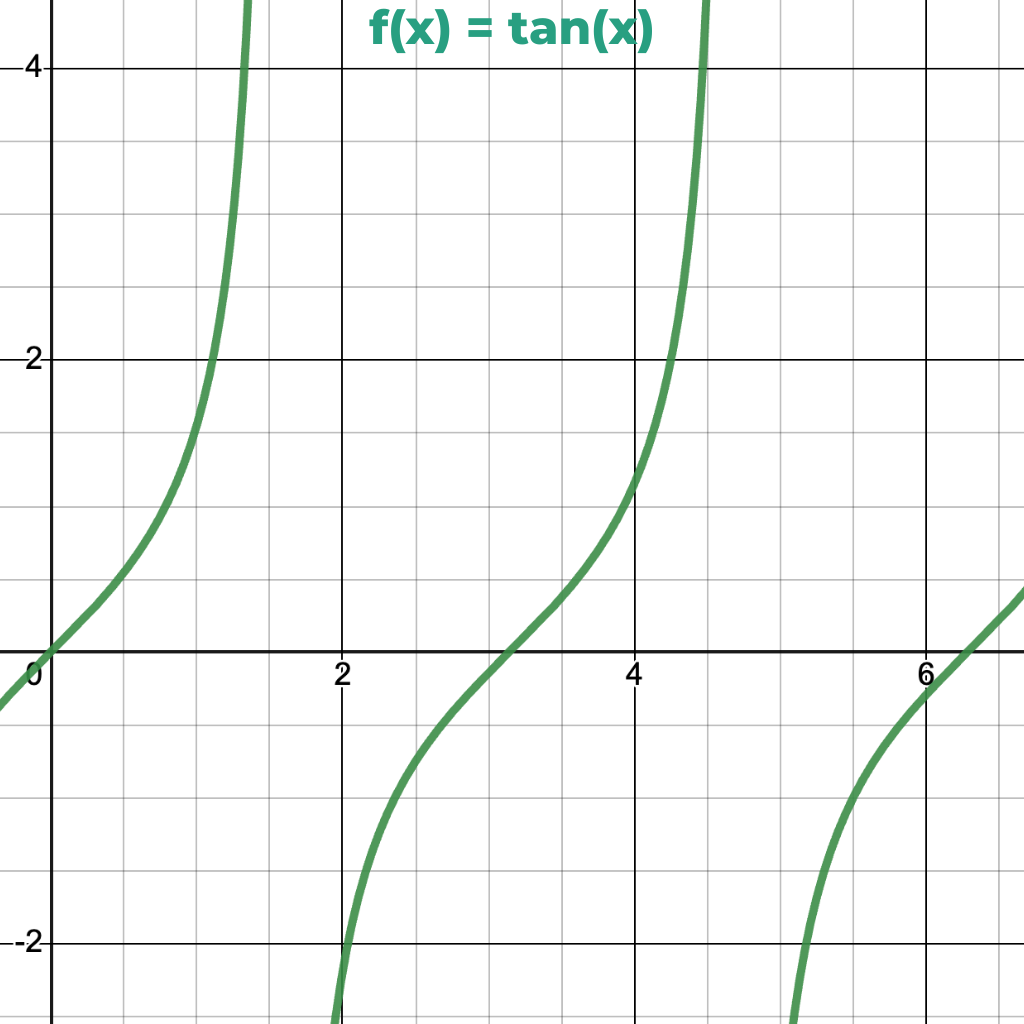
The tangent of an angle in a right angled triangle is the ratio of the length of the opposite side to the length of the adjacent side. Unlike the sine and cosine functions, the tangent function is not defined for all values of x. As shown, tan(x) is undefined when the angle is a multiple of 90 degrees.
Note:
The domain for tanx(x): All x but cannot be a multiple of 90 degrees.
The range for tan(x): All real numbers
Need more explanation? Chat with a tutor now!
QUESTIONS?
If you have any questions about our services or have any feedback, do not hesitate to get in touch with us!